Posts

Be Ready if There is Civil Disobedience Near You

Most of us would not seek out active Civil Disobedience. However,  you could get caught in a situation when law and order breaks down. This could happen in most any where people gather.

  • Shopping areas
  • Down town government centers
  • During a peaceful protest
  • At public gathering or festivals

Public dissent could spread to freeways or targeted businesses. People might participate in violence because of anger towards the system, thrill seeking or intent to commit crime.

If you are in a situation where a riot may break out

Read the crowd, trust your instincts and leave if it feels like something might happen.
Establish a meet up point and keep track of your companions
Know the area you will be entering
Wear neutral clothing, no camo, no black hoodies.  If wearing a work uniform try to hide logos or turn shirts inside out.
Stay hydrated
Do not wear a ponytail, scarf or things that can be grabbed
Keep your things in a cross body bag
Wear sturdy shoes
Wear long sleeves and long pants
Carry toothpaste and smear it under eyes if case of tear gasGeneric image of small toothpaste

Wear glasses instead of contacts
Bring your inhaler if you have asthma
Avoid wearing heavy sun screen, makeup or lotions, tear gas may stick to this
Carry googles, latex gloves and ear plugs
Keep your ID and emergency contact info with you
Consider having a second cell phone
Keep your arms at your chest level to protect your lungs if caught in a crowd crush

Get away from the riot

If you are driving, stay calm in your car and slowly leave the area if possible, try not to stop.
Avoid high traffic areas and move away from the riot
Keep children in your arms
Lock Elbows with your companions
If there is a rush of people and you fall, roll up into a ball
Travel in the direction of the crowd
Stay with other people, avoid being alone
Move carefully and purpose fully towards shelter, you may not want to run, instead look for places that are safe.
Avoid chain and luxury stores, which are often targets for looting
Once indoors find a secure place like a basement. However, avoid being alone in a secluded place
Move away from glass windows and doors
Be aware of escape routes in case of fire
Try and get information from news sources, social media or radio
If you get mugged give them your stuff
If some try’s to assault you, be fierce, there is no right or wrong, just survive

If you’re exposed to tear gas or pepper spray

Do not rub your eyes, mouth or nose if hit with tear gas
Use water or saline to flush eyes of tear gas and pepper spray
A solution of half liquid antacid and half water may help to rinse eyes
A spray of half water and half  milk of magnesia may help to rinse skin

If you are at home near the disturbance

Shelter in place, keep an eye on the situation and consider moving to a secure location in the home
Stay away from the windows
Have an escape plan
Turn off heaters AC and fans
Stay informed with Social media TV and radio

If you are arrested or confronted by law enforcement

Take this advice from the ACLU

Your rights

  • You have the right to remain silent. For example, you do not have to answer any questions about where you are going, where you are traveling from, what you are doing, or where you live. If you wish to exercise your right to remain silent, say so out loud. (In some states, you may be required to provide your name if asked to identify yourself, and an officer may arrest you for refusing to do so.)
  • You do not have to consent to a search of yourself or your belongings, but police may pat down your clothing if they suspect a weapon. Note that refusing consent may not stop the officer from carrying out the search against your will, but making a timely objection before or during the search can help preserve your rights in any later legal proceeding.
  • If you are arrested by police, you have the right to a government-appointed lawyer if you cannot afford one.
  • You do not have to answer questions about where you were born, whether you are a U.S. citizen, or how you entered the country. (Separate rules apply at international borders and airports as well as for individuals on certain nonimmigrant visas, including tourists and business travelers. For more specific guidance about how to deal with immigration-related questions, see our immigrants’ rights section.)

How to reduce risk to yourself

  • Stay calm. Don’t run, resist, or obstruct the officers. Do not lie or give false documents. Keep your hands where the police can see them.

What to do if you are arrested or detained

  • Say you wish to remain silent and ask for a lawyer immediately. Don’t give any explanations or excuses. Don’t say anything, sign anything, or make any decisions without a lawyer.
  • If you have been arrested by police, you have the right to make a local phone call. The police cannot listen if you call a lawyer. They can and often do listen if you call anyone else.

If you believe your rights were violated

  • Write down everything you remember, including officers’ badges and patrol car numbers, which agency the officers were from, and any other details. Get contact information for witnesses.
  • If you’re injured, seek medical attention immediately and take photographs of your injuries.
  • File a written complaint with the agency’s internal affairs division or civilian complaint board. In most cases, you can file a complaint anonymously if you wish.

What you can do if you think you’re witnessing police abuse or brutality

  • Stand at a safe distance and, if possible, use your phone to record video of what is happening. As long as you do not interfere with what the officers are doing and do not stand close enough to obstruct their movements, you have the right to observe and record events that are plainly visible in public spaces.
  • Do not try to hide the fact that you are recording. Police officers do not have a reasonable expectation of privacy when performing their jobs, but the people they are interacting with may have privacy rights that would require you to notify them of the recording. In many states (see here) you must affirmatively make people aware that you are recording them.
  • Police officers may not confiscate or demand to view your photographs or video without a warrant, and they may not delete your photographs or video under any circumstances. If an officer orders you to stop recording or orders you to hand over your phone, you should politely but firmly tell the officer that you do not consent to doing so, and remind the officer that taking photographs or video is your right under the First Amendment. Be aware that some officers may arrest you for refusing to comply even though their orders are illegal. The arrest would be unlawful, but you will need to weigh the personal risks of arrest (including the risk that officer may search you upon arrest) against the value of continuing to record.
  • Whether or not you are able to record everything, make sure to write down everything you remember, including officers’ badge and patrol car numbers, which agency the officers were from, how many officers were present and what their names were,  any use of weapons (including less-lethal weapons such as Tasers or batons), and any injuries suffered by the person stopped. If you are able to speak to the person stopped by police after the police leave, they may find your contact information helpful in case they decide to file a complaint or pursue a lawsuit against the officers.
Get new posts by email

Save Money while Preparing for Disaster

I’m pretty fortunate these days in that I have a little extra space to store extra food and a little extra money to stock up.  But it wasn’t always that way.  In fact, when I had kids it was even more important to make sure I prepared for poverty and a dry bank account.

It stands to reason if you have food in the house you may not go to the store as often. You might be able to eat healthier food as well.

Try and have 1-6 months of food stored in your home.

Don’t buy food you don’t normally eat. If your family eats burgers and pizzas regularly, A lock down may not be the time to try that fancy lentil curry recipe you’ve been wanted to try.  Keep it simple. Don’t expect people to be reasonable. Do your best with your wacky family.

Rotate the food you’ve stored up as you eat it.

Disaster food kits are expensive and will probably expire before you need it.
MRE’s are great for a disaster shelter before the kitchen gets set up, not so much for home preparedness.
Dehydrated food may have a place in your disaster kit. Think freeze dried ice cream for someone who wont eat anything but ice cream. Come to think of it, it might be good for us all when under stress.

After a disaster most people want comforting foods. If your family has a treat from old homelands or childhood this is the time to break it out.

Stretch your budget while preparing to shelter in place.

Rice*

Surprisingly, When there was three of us we would go thru 50lbs in a couple of years. I don’t want to do the math on this, I’m, not really sure how long it took to use it up, it doesn’t matter because rice doesn’t go bad easily, Uncooked white rice can last indefinitely when stored properly. It’s also the filler for a vegetable and protein meal.  Grab as much rice as you can afford and keep it in a way where it wont get wet in a flood or infested by vermin.

We found these storage bins for $9.97 from Walmart 

I’m not sure how much rice is going for at the local Costco, it’s gotten pricey, but still available at the  dollar more or less store and your local grocery in small bags.

Use up the fresh stuff first after a disaster.
Boil Chicken in salted water until cooked, 45 minutes or so and Pull out the bones. As long as you keep an eye on the pot and don’t let it boil dry or burn it’s hard to mess up. Serve over rice.

Add seasoning and/or vegetables
  • Garlic powder or garlic*
  • Onion powder or onions*
  • Celery
  • Bell peppers
  • Lemon juice*
  • Corn starch* mixed with water and used for thickening
  • Canned* or frozen veggies*
  • *Dry or *canned beans
  • Any vegetable actually, the more veggies you add to more stew you have.
    Cook hamburger in a pan, drain the grease, add beans, tomato sauce and veggies.
    Try Korean army stew.
  • Canned fish*
  • peanut butter* and jelly*
  • oatmeal*
  • dry* or shelf stable milk*

How to Cook Rice

bowl of ramen with egg, lime and greensRamen*

Like rice, ramen can make a meal with canned veggies, or use up stuff from the freezer in a power outage. It’s easy to cook as well on a busy school night.

  • Pasta*
  • Tomato sauce*
  • Seasonings*

*look for this at the dollar, more or less store.

Seal up bags with a Use a hair straightener

Use a hair dryer as a vacuum sealer

Note: Don’t try to preserve cooked food this way. Only things dry ingredients you don’t want to get wet in a disaster.

We found these storage bins for $9.97 from Walmart 

CPR + AED Awareness Week (June 1 – 7)

CPR + AED Awareness Week (June 1 – 7)

National CPR & AED Awareness Week takes place every year from June 1 – 7. During this week, we recognize the importance of initiating CPR and using an AED as a response to cardiac arrest. More than 350,000 people suffer cardiac arrest annually, but less than 10% survive.

Every second counts when responding to cardiac arrest. If you see someone suddenly collapse, become unresponsive, and stop breathing, call or ask someone to call 9-1-1, send someone for an AED, and begin CPR. Even if you aren’t trained, doing chest compressions (pushing hard and fast in the center of the chest) is better than doing nothing. In many cases, the 9-1-1 operator can talk you through CPR.

Learn Hands only CPR
First aid and CPR Classes
Where you can buy an AED for your business

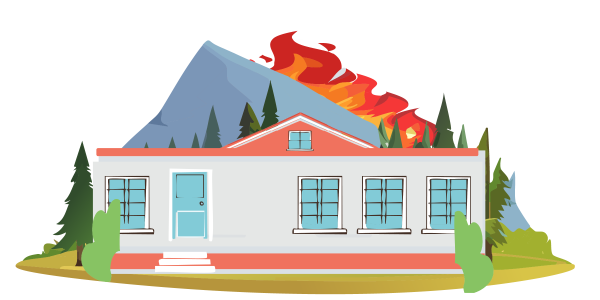
BeReady for wildfire

Wild fire Season is here. Here is what you can do to BeReady .
Take a look at the defensible space around your home.
Expect public safety power shut offs (PSPS) during extreme fire danger.
Obtain Battery back up for medical and communication devices
Have a couple days (minimum) food and water in the house
Don’t forget your neighbors!
BeReady to evacuate
Consider the needs of large and small farm animals
Keep an eye on the weather Install smoke detectors, Free help may be available or call your local fire department.
Get fire extinguishers and fire smothering blankets
Use generators and heaters properly and with proper ventilation, install Carbon monoxide detectors
Create an evacuation plan in the event of wild fire.
Know alternate routes out of your neighborhood.
Consider wearing dust masks or respirators during and after wild fire
Never leave campfires unattended, properly dispose of cigarettes and matches, and avoid igniting materials in dry conditions
Wildfires spread rapidly in dry conditions, especially when fueled by wind.
Keep vehicles out of dry grass
Avoid target shooting during extreme fire danger

BeReady with Your Family

No one has the perfect family, you maybe the only person willing or able to make decisions in an emergency.  Planning ahead for young people and people with impairments may help to preserve your mental health and make stressful times easier for your dependents.

  • Discuss a plan with your dialysis center and plan early for treatment
  • Invest in Portable coolers for refrigerated meds
  • Make sure you have information for a contact that knows your medical needs (your cell phone maybe unusable or locked up)
  • Install emergency lights in rooms

Elderly/Disabled

Some persons may not comprehend what is happening and maybe difficult to evacuate.  Planning ahead is critical for caregivers. Have identifying information and contact info for in case they get separated from their care givers.

  • Be aware of shut ins in your neighborhood to avoid isolation
  • If you are unable to locate or connect with a loved one or friend who has been impacted by a current disaster event, the American Red Cross can help you locate them if they meet certain criteria.

If you live alone and are disabled

  • Contact your local fire department and police department to find out how to give them important information about you, including a recent photo that will help them rescue you.
  • Tell people you trust, such as family members, friends, and neighbors, that you have dementia and ask them to check in on you if there is an emergency.
  • Talk with your health care provider and paid caregivers about planning for your medical and personal care needs in an emergency.
  • Have an evacuation plan for the home

For caregivers

  • Stay calm and patient
  • Add comfort items to your emergency kit.
  • Add extra items to disaster kits such as eye glasses and hearing aids, canes, etc.
  • Be prepared to shelter in place if evacuation is not possible
  • Ask for help and find people and agencies that can help, provide advocates with your emergency plan

Language, cultural issues

Some people maybe triggered by loud noises and shaking and relive old trauma. They may not have English skills to understand what is going on.

  • Create disaster  information in the language of the person. Use pictures. Learn basic words to explain earthquake, tornado, safe, evacuate etc.

Neurodivergent (autism)

If you or family members are neuro divergent and will have trouble coping with emergencies consider finding safe and quiet places mentally and physically. If you are in a shelter with many people you might ask for a quiet place or request medical help. There is no need to “tough it out”.

prepare with Predo book cover to teach kids to Be readyChildren

  • Create a family password or phrase to prevent your child from going with a stranger.
  • Teach children when to call 911
  • Make sure kids have an emergency contact person and know how to reach them
  • The American Red Cross has put together a program called Prepare with Pedro
  • Prepare with Pedro is available in many languages, in multiple topics and has Materials available for teachers.
  • Look for activities to keep the children occupied during an emergency, stickers, drawing books, etc.  Down load activities for a tablet.
  • Consider adding food items to your emergency kit that give comfort while still being marginally nutritious. It’s probably not lentil soup.


Pets and Livestock

If you have large animals you may be living in an area susceptible to wild fire.

Service animals that assist people with disabilities are allowed in Red Cross shelters, but pets are not allowed.

Make sure your pet is chipped and up to date on vaccinations

Focus on defensible space around pens and corrals

BeReady if lost in the wilderness

You may know the story of the infamous Donner party

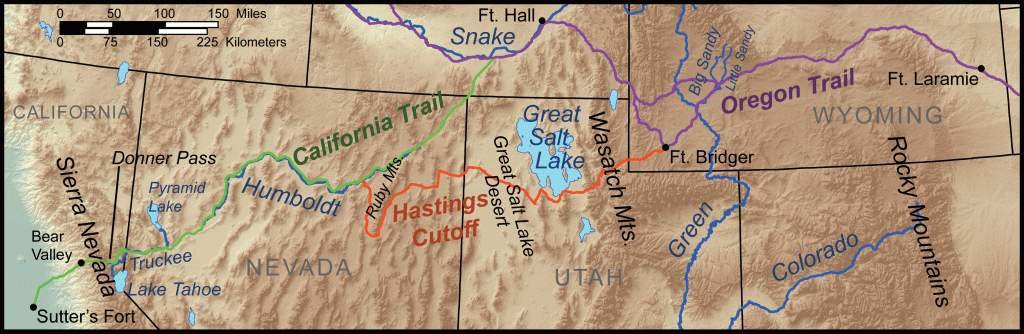
The Donner party was a group of pioneers who thru a series of mishaps tried to travel over the Sierra Nevada range just North of Lake Tahoe a bit late in the fall of 1846. Another person had been stranded near a small lake on the pass the year before, so there was already a small cabin there which they sheltered in. Apparently they did not suffer from the cold, but after an arduous journey thru the great basin desert they arrived at the top of mountain to heavy snow and were low on food. Read more about the Donner party

Map of the Route the Donner Party took. Wikipedia

The immigrants were from the Midwest where the winters can be harsh, so they felt they knew how to deal with cold weather, but they were un-prepared to deal with 22.5 feet (6.9 meters) of snow. They also were famers, not hunters skilled at finding food and suspicious of the indigenous people who lived on the land. They were late on the road and decided to push over the mountains from near present day Reno, Nevada. This was a time when people had wagons drawn by oxen (cattle), thin leather shoes and heavy woolen clothes.  Eventually some members of the the group resorted to cannibalism. But not all and not all with the same intentions.

There are many theories and stories on what went wrong.  Studying the story of the Donner party may help to enlighten us to survival problem solving. But they might have benefited to have Tiffany Stanton in their party. Tiffany is a med student who went on a three day trip in the mountains in April 2025 and got caught in a snow avalanche. Despite being injured, cold and alone she survived by knowing what to forage and by trying to find her way out.  Here is the SFgate story. A Georgia woman spent three weeks lost in winter in the sierras

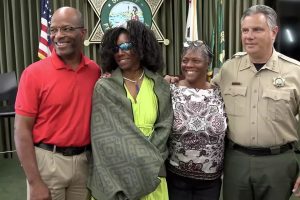
Stanton family after Tiffany's rescue
Tiffany and her parents, SFgate.com

What can we learn from Tiffany to survive?

Know what is edible. Tiffany survived by eating wild leeks.  Other than some some snow blindness she did pretty well and found an unlocked cabin where she was rescued. There is one account that someone, probably a native American, left a bunch of wild onions on the door step of the Donner party cabin.  This means the local tribes knew the immigrants were up there and were hungry.

I wasn’t initially sure I’ve be able to survive

But learning that pine tree bark and needles make a nice tea, that I can chew grass and eat dandelions makes me more confident. I understand the Donner party did have pine tree tea, as well as dogs, pack animals and leather which they ate.  One group of people did try to walk out and resorted to murdering their Indian guides and consuming them. The Breen family who were Irish immigrants did not loose any of their members and did not resort to cannibalism.  There are stories that the last man left at the lake camp may have become deranged and cannibalized the other survivors.

Know what to eat if lost in the wilderness:

If there is snow on the ground, you might find edible plants at a lower elevation.
If it is very hot and dry you might look for shady spots or springs

  • Leeks/onions
  • Miners lettuce
  • Cattail hearts
  • Early berries
  • Pine nuts
  • Grass (chew and spit out)
  • Dandelions
  • Clover
  • Desert plants that contain water
  • Small birds and mammals
  • Insects, snails, crustaceans

Before you hike, learn how to BeReady if something goes wrong

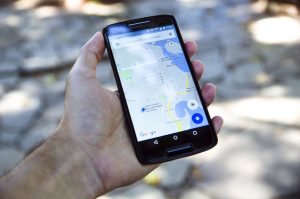
hand holding cell phone with GPS showing
Pexels
  • Tell someone where you are going, have a plan for when they should be concerned
  • Wear clothes and food wear that are appropriate for the conditions
  • Download maps of the area you will be hiking in so that you can use GPS in your cell phone if you have no signal. Conserve battery power
  • Carry light snacks, water and a purification stick or bottle, extra clothes, fire starting tools, survival blanket even on short hikes and a carry a whistle.
  • Carry Bear Spray  for wild animals and for the human kind.
  • Know what is can be foraged in the area you will be in, Never eat, or let your kids eat, something you cannot identify with one hundred percent certainty, and never eat wild mushrooms without expert training and knowledge.
  • If you don’t have a clear direction of were to go to find help, stay put.
  • Build a smokey signal fire if possible (Be fire aware, windy days may cause wild fire)
  • If you decide to find your way out be aware of direction and the motion of the sun. Follow streams to find civilization
  • If you travel, leave evidence and trail markers to show you were there
  • Stay optimistic, stay calm and don’t give up!

In the Desert

If you plan to travel into parts of the United states  and other parts of the world, be aware that Your cell phone may not work for calling. Don’t underestimate the desert in the Great Basin, Death Valley, Mojave, Great Salt Lake Desert, Chihuahuan and Sonoran Deserts, Baja, Columbia, Wyoming and Snake river plains can be very remote and getting stranded in these places in the winter or summer can be deadly.

  • Learn how to establish GPS coordinates with your phone
  • Tell someone were you are going
  • Travel with plenty of water. Think a few gallons for you and possibly for your car.
  • If your car in unreliable don’t go to far off read.
  • If you can not walk far stay on the pavement
  • Know how to do basic automobile repairs and carry your car kit.
  • Use a mirror from the car to signal for help


BeReady If your car goes into water

If your car goes into water—especially deep water—time is critical. Here’s what you should do immediately to increase your chances of survival:


GET OUT FAST

You have 30–60 seconds before the car may be fully submerged.


Step-by-Step:

  1. Stay calm and act quickly. Panic wastes precious time.

  2. Unbuckle your seatbelt immediately. Do the same for passengers, especially children. Get them out first.

  3. Forget your phone or belongings. Every second counts.

  4. Don’t open the door—it’s nearly impossible due to water pressure and will flood the cabin faster.

  5. Roll down or break the window:

    • Electric windows usually still work for up to a minute.

    • If windows won’t open, break the side window (not the windshield—it’s too strong).

    • Use:

      • A window-breaking tool keep one in the car where both driver and passenger sides may easy reach it.

      • A hard object UPDATE: I’ve seen video where a ball bat and the head rest do not break the window. Use a window breaking tool.

      • You will not be able to break the wind shield, you may be able to kick it out. It’s not the time to find out.
  6. Escape through the window. Push out and swim up to the surface.


For Children:

  • Unbuckle them in reverse order (oldest first, so they can help themselves).

  • Push them out of the window ahead of you.


If the Car Is Already Submerged:

  • Try to equalize pressure by letting water in gradually until it’s nearly full.

  • Then open the door and escape—this is very difficult but sometimes the only option if windows are jammed.

Scroll to Top